No. 308, Gongxin Road, Industrial Park, Dongxing Town, Jingjiang City, Jiangsu Province, China
 [email protected]/ [email protected]
 English
 Español
 русский
 中文简体
中文简体 No. 308, Gongxin Road, Industrial Park, Dongxing Town, Jingjiang City, Jiangsu Province, China[email protected]/ [email protected]
Installing a Radiant Tube correctly involves four core stages: aligning the tube assembly precisely with the burner and recuperator connections, installing supports at the correct intervals to accommodate thermal expansion, sealing all joints to prevent combustion gas leakage, and performing a low-temperature test run before bringing the system to full operating temperature. Improper support spacing is one of the most common causes of premature radiant tube sagging and cracking, since a tube that heats to several hundred degrees Celsius during operation expands significantly along its length and needs supports positioned to allow that movement without placing stress on the tube wall.
Skipping the low-temperature test run before full operation is another frequent mistake, since ramping a radiant tube directly to full firing temperature without a gradual warm-up cycle can cause thermal shock that leads to early cracking, particularly on cast alloy tube sections that require controlled heating to avoid uneven thermal stress.
Content
Before any tube is mounted into the furnace structure, a thorough inspection of both the tube assembly and the installation environment helps catch potential issues that would be far more difficult to address once installation is underway.
Catching a defect during pre-installation inspection avoids the far greater cost and downtime associated with discovering a cracked or misaligned tube after the furnace has already been fired up for the first time.
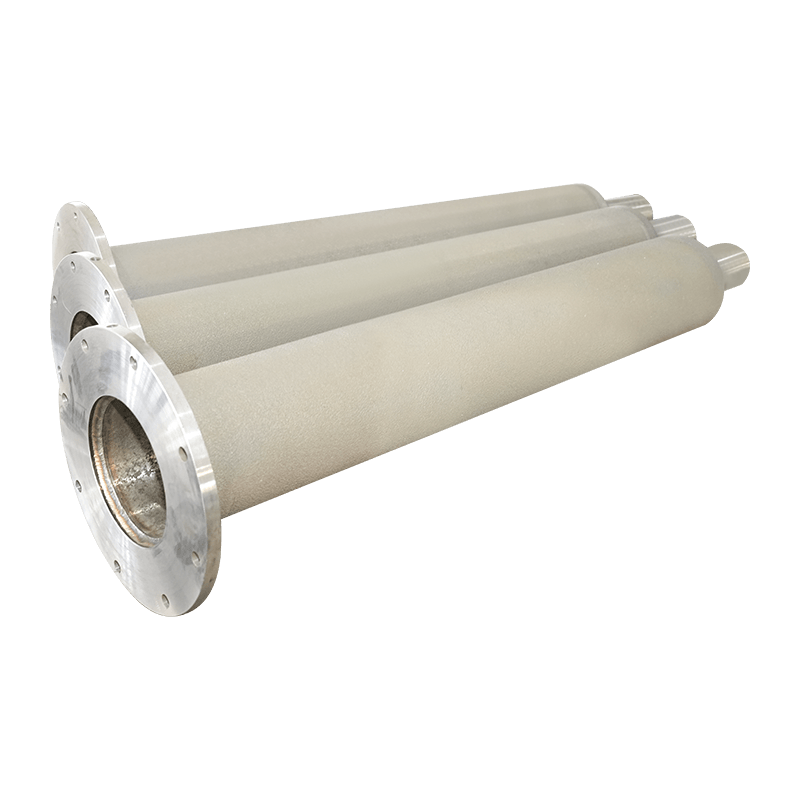
Accurate alignment during mounting directly affects how evenly the tube heats and how well it interfaces with the burner and exhaust connections. Even a small misalignment can create uneven combustion gas flow, leading to hot spots that shorten tube life.
A misaligned burner connection is a common source of localized overheating at the tube inlet, since combustion gases entering off-center create uneven flame impingement on the tube wall rather than distributing heat evenly along the intended flow path.
Radiant tubes expand considerably as they heat from ambient temperature to full operating temperature, sometimes reaching temperatures well above 900 degrees Celsius depending on the furnace application. Supports must be spaced and designed to accommodate this expansion without restricting the tube's natural movement.
| Straight tube sections | Supports spaced evenly to prevent sagging under the tube's own weight at operating temperature |
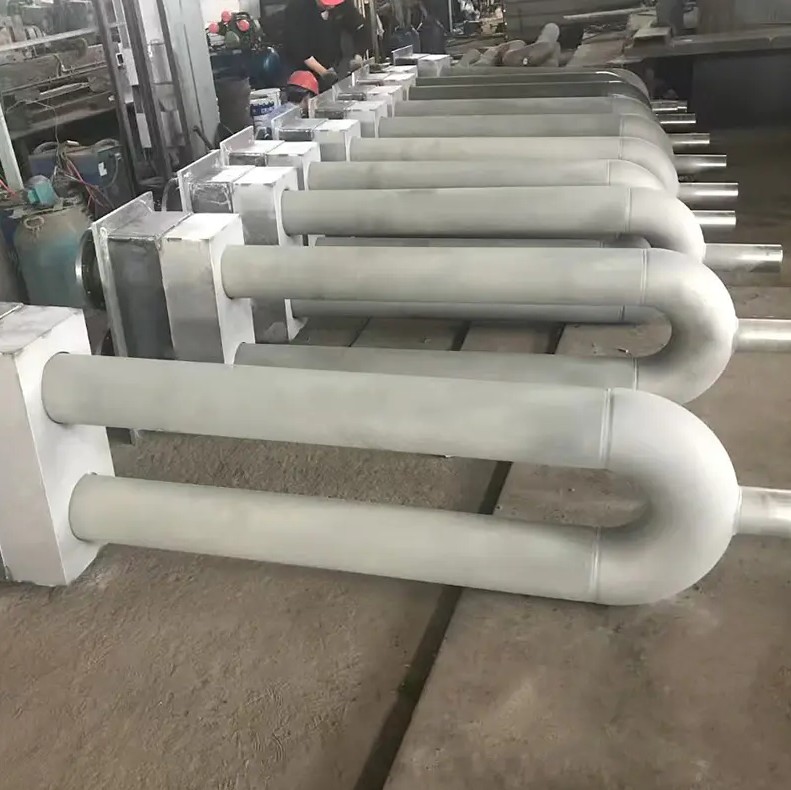
| U-shaped and W-shaped tubes | Support brackets positioned to allow free expansion at the bend sections |
| Vertical tube installations | Support collars designed to allow axial expansion downward without binding |
A tube fixed rigidly at multiple points without allowance for expansion is likely to develop stress cracks within the first several heating cycles, which is why manufacturers of cast heat-resistant alloy tubes generally specify a fixed support point at one end and sliding or roller supports along the remaining length.
Proper sealing at every connection point prevents combustion gas leakage, which not only wastes fuel efficiency but can also introduce safety hazards in an industrial furnace environment. High-temperature gaskets and sealants rated for the tube's operating temperature range are essential at every joint.
Using a gasket material rated below the tube's actual operating temperature is a common installation error that leads to gasket degradation and gas leakage within a relatively short period after startup, so confirming gasket temperature ratings against the specific furnace application is a necessary step before final assembly.
Once mechanically installed and sealed, a radiant tube should not be brought directly to full operating temperature. A gradual warm-up cycle allows the tube material to expand evenly and lets installation crews verify proper operation before committing to full furnace load.
Furnace manufacturers commonly recommend a warm-up period of several hours for cast alloy radiant tubes, since rushing this stage is one of the most frequently cited causes of early-life tube failure reported in industrial furnace maintenance records.
A number of recurring errors account for most radiant tube installation problems reported across industrial furnace applications.
Following a documented installation checklist rather than relying on memory or past experience alone helps installation crews avoid these mistakes, particularly on larger furnace projects involving multiple tube assemblies installed within a compressed project timeline.
Selecting an appropriate tube configuration, material grade, and shape depends on furnace size, target operating temperature, and the specific heat treatment or industrial process being served. Straight, U-shaped, W-shaped, and single-ended configurations each suit different furnace layouts and heating requirements.
Manufacturers such as Huaye Casting produce Radiant Tube assemblies in a range of heat-resistant alloy grades and shapes designed to match specific furnace configurations, helping installation teams select a tube already engineered for the expansion behavior and temperature range expected in a given application.
Even a correctly installed radiant tube benefits from periodic inspection once the furnace enters regular production use. Checking support movement, joint seal integrity, and visible surface condition during scheduled maintenance windows helps catch developing issues before they lead to unplanned downtime.
Establishing a routine inspection schedule following the initial installation and startup period allows facility maintenance teams to confirm the radiant tube continues operating within its designed thermal expansion range, extending service life and reducing the risk of an unexpected failure during production.
We will reply to you as soon as possible.
 custom alloys for sale
wholesale different alloys
custom alloys for sale
wholesale different alloys