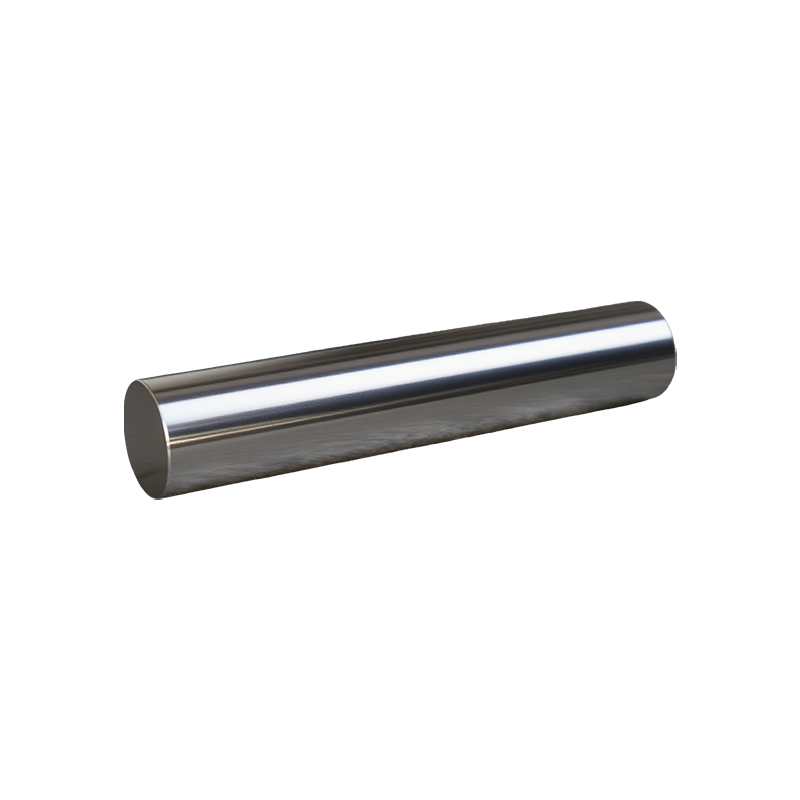
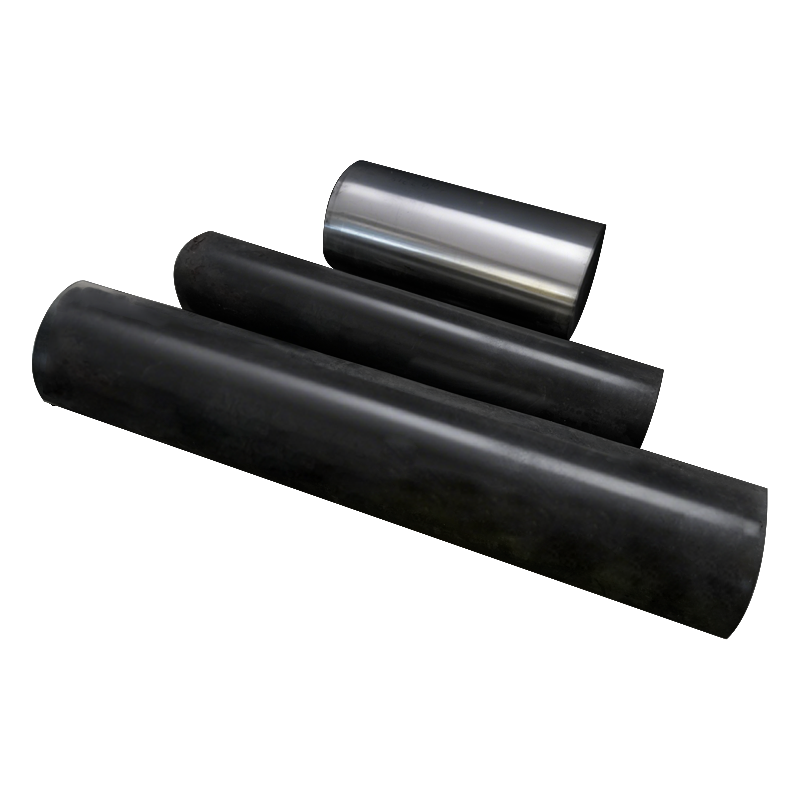
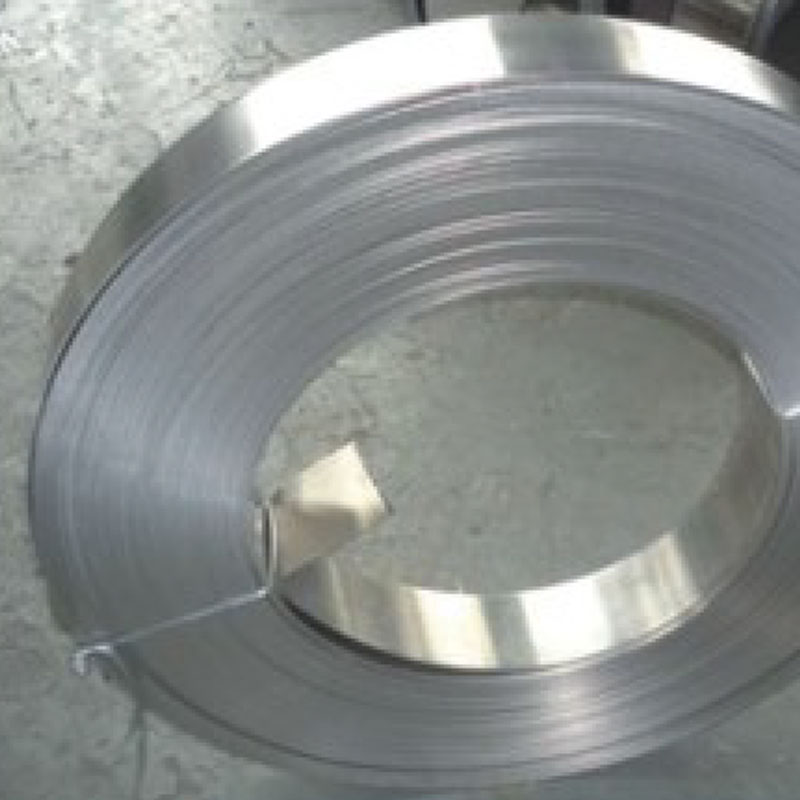
1. Core Knowledge Overview High-temperature alloy rods are precision-engineered metal bars designed to retain strength, resist oxidation, and maintain dimensional stability at elevated temperatures. These rods ...
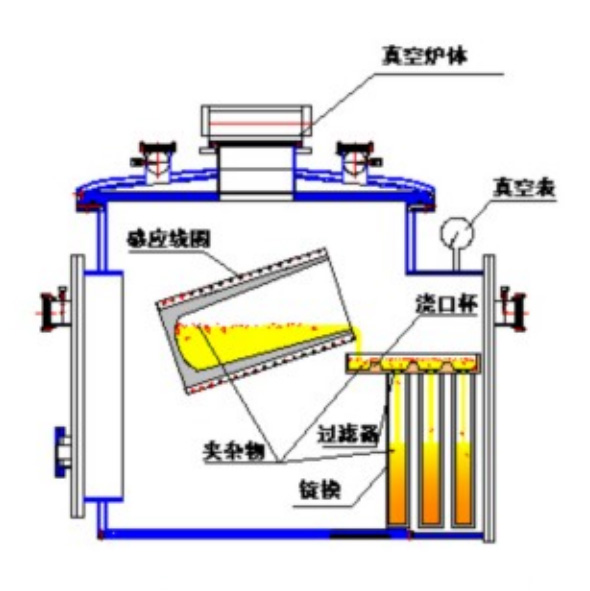
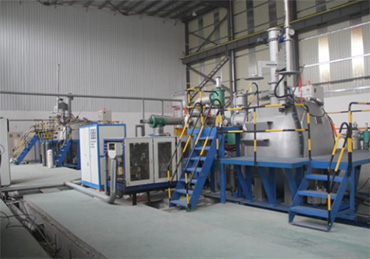
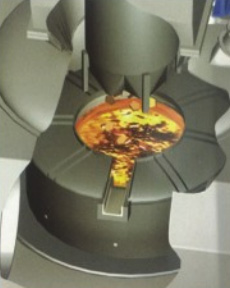
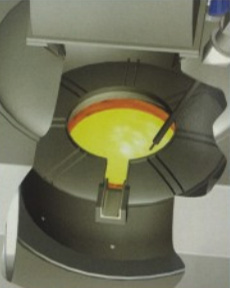
READ MOREIn 2016, our company invested in the construction of a VIM (Vacuum Induction Melting) production line for high-temperature alloy master alloys, designed for near-net shape forming, short process flow, and low cost. The line is equipped with vacuum induction furnaces of 500kg, 300kg, and 50kg capacities. Featuring a small-volume melting chamber and a horizontal furnace structure, these furnaces achieve optimal working vacuum control. A three-phase electromagnetic stirring system ensures stable agitation of the molten pool, allowing added elements to dissolve uniformly from top to bottom while maintaining a near-constant melt temperature.
By precisely controlling the pressure and temperature of each melt, we reduce process variability, ensuring a stable distribution of elements and keeping volatile element content within a very narrow range. Additionally, the large melt surface area (bath D/H > 1) provided by the VIM furnace facilitates effective material degassing.
To monitor product quality, we have introduced the SPECTROMAXx direct-reading spectrometer from Germany, enabling online analysis of alloy composition, as well as monitoring of harmful elements and nitrogen content to ensure the quality of our master alloys.
Our company is also equipped with a mechanical properties laboratory, capable of efficiently testing materials for high-temperature stress-rupture properties, high tensile properties, and room-temperature tensile properties.
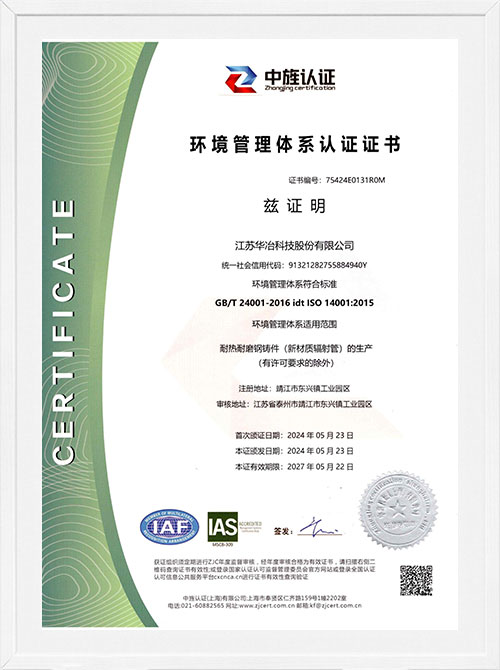
The entire production system was fully commissioned by March 2017 and has achieved industrial-scale batch production capability. We are certified under the ISO9001 quality management system and have an annual production capacity of approximately 5,000 tons of high-temperature alloy master alloys. All products have been tested by the National Analysis Center for Iron & Steel, with technical specifications meeting the corresponding metallurgical industry standard YB/T 5248-93.
Compared to traditional preparation processes, the high-temperature alloy master alloys produced by our VIM process offer advantages such as high metallurgical quality and low inclusion content.
| Grade | K417 | K418 | K419 | K438 | K444 | K452 | K4169 | |
| Chemical composition (weight%) |
C | 0.13 | 0.08 | 0.09 | 0.10 | 0.04 | 0.07 | 0.02 |
| 0.22 | 0.16 | 0.14 | 0.20 | 0.08 | 0.14 | 0.08 | ||
| Cr | 8.50 | 11.50 | 5.50 | 15.70 | 15.40 | 20.00 | 17.00 | |
| 9.50 | 13.50 | 6.50 | 16.30 | 16.30 | 21.80 | 21.00 | ||
| Mn | 0.50 | 0.50 | 0.50 | 0.20 | 0.30 | 0.30 | 0.35 | |
| Mo | 2.50 | 3.80 | 1.70 | 1.50 | 1.60 | 0.30 | 2.80 | |
| 3.50 | 4.80 | 2.30 | 2.00 | 2.30 | 0.90 | 3.30 | ||
| Mb | 一 | 1.80 | 2.50 | 0.60 | 0.10 | 0.15 | 4.40 | |
| 2.50 | 3.30 | 1.10 | 0.30 | 0.35 | 5.40 | |||
| Ta | 一 | 一 | 一 | 1.50 | 一 | 一 | 0.10 | |
| 2.00 | ||||||||
| Ni | 56.78 | 69.44 | 55.76 | 58.19 | 54.60 | 52.70 | 50.00 | |
| 64.92 | 76.75 | 63.43 | 63.94 | 60.90 | 60.90 | 55.00 | ||
| Co | 14.00 | 11.00 | 8.00 | 10.00 | 10.30 | 1.00 | ||
| 16.00 | 13.00 | 9.00 | 11.00 | 12.00 | ||||
| Ti | 4.50 | 0.50 | 1.00 | 3.00 | 4.20 | 3.10 | 0.65 | |
| 5.00 | 1.00 | 1.50 | 3.50 | 5.00 | 3.90 | 1.15 | ||
| V | 0.60 | 一 | 0.10 | 一 | 一 | 一 | 一 | |
| 0.90 | ||||||||
| W | 一 | 一 | 9.50 | 2.40 | 4.70 | 3.00 | 一 | |
| 10.50 | 2.80 | 5.90 | 4.00 | |||||
| Zr | 0.05 | 0.06 | 0.03 | 0.05 | 一 | 一 | 0.05 | |
| 0.09 | 0.15 | 0.08 | 0.15 | |||||
| Fe | 1.00 | 1.00 | 0.50 | 0.50 | 0.50 | 0.50 | 11.57 | |
| 24.83 | ||||||||
| Al | 4.80 | 5.50 | 5.20 | 3.20 | 2.80 | 2.10 | 0.30 | |
| 5.70 | 6.40 | 5.70 | 3.70 | 3.20 | 2.90 | 0.70 | ||
| Others | 一 | 一 | Cu0.40 | 一 | Hf0.20-0.40 | B0.01-0.02 | Cu0.30 | |
| B0.06-0.10 | Zr0.02-0.06 | |||||||
| Mechanical properties of alloy materials | Temperature(°C) | 750 | 800 | 950 | 800 | 900 | 一 | Room temperature |
| Tensile Strength(σb/ Mpa) |
686 | 755 | 700 | 836 | 一 | 一 | 965 | |
| Durability Performance(σ/ Mpa) |
一 | 490 | 一 | 365 | 274 | 一 | 550 | |
| Elongation(δ 1%) |
2.5 | 4 | 6 | 16.6 | 一 | 一 | 30 | |
| Grade | GH2132 | GH3039 | GH3044 | GH3128 | GH4133 | GH4169 | GH4220 | GH4708 | |
| Chemical Composition (weight%) |
C | 0.08 | 0.08 | 0.10 | 0.05 | 0.07 | 0.08 | 0.08 | 0.05 |
| 0.10 | |||||||||
| Cr | 13.50 | 19.00 | 23.50 | 19.00 | 19.00 | 17.00 | 9.00 | 17.50 | |
| 16.00 | 22.00 | 26.50 | 22.00 | 22.00 | 21.00 | 12.00 | 20.00 | ||
| Ni | 24.00 | 69.42 | 50.20 | 56.59 | 70.22 | 50.00 | 46.41 | 58.12 | |
| 27.00 | 77.60 | 63.20 | 65.20 | 76.65 | 55.00 | 60.65 | 70.05 | ||
| Co | 一 | 一 | 一 | 一 | 一 | 1.00 | 14.00 | 0.05 | |
| 15.50 | |||||||||
| W | 一 | 一 | 13.00 | 7.50 | 一 | 一 | 5.00 | 5.50 | |
| 16.00 | 9.00 | 6.50 | 7.50 | ||||||
| Mo | 1.00 | 1.80 | 1.50 | 7.50 | 一 | 2.80 | 5.00 | 4.50 | |
| 1.50 | 2.30 | 9.00 | 3.30 | 7.00 | 6.00 | ||||
| Al | 0.40 | 0.35 | 0.50 | 0.40 | 0.70 | 0.30 | 3.90 | 1.90 | |
| 0.75 | 0.80 | 1.20 | 0.70 | 4.80 | 2.30 | ||||
| Ti | 1.75 | 0.35 | 0.30 | 0.40 | 2.50 | 0.75 | 2.20 | 1.00 | |
| 2.30 | 0.75 | 0.70 | 0.80 | 3.00 | 1.15 | 2.90 | 1.40 | ||
| Fe | 50.17 | 3.00 | 4.00 | 0.20 | 1.50 | 11.92 | 3.00 | 4.00 | |
| 58.65 | 24.40 | ||||||||
| Nb | 一 | 0.90 | 一 | 一 | 1.15 | 4.75 | 一 | 一 | |
| 1.30 | 1.65 | 5.50 | |||||||
| V | 0.10 | 一 | 一 | 一 | 一 | 一 | 0.25 | 一 | |
| 0.50 | 0.80 | ||||||||
| B | 0.00 | 一 | 一 | 0.01 | 一 | 0.01 | 一 | 0.01 | |
| 0.01 | |||||||||
| Zr | 一 | 0.06 | 一 | 一 | 一 | ||||
| Ce | 一 | 一 | 一 | 一 | 0.01 | 一 | 一 | 0.03 | |
| Mn | 一 | 一 | 0.50 | 0.50 | 0.35 | 0.35 | 0.50 | 0.50 | |
| Mechanical properties of alloy materials | Temperature(°C) | Room temperature | Room temperature | 一 | 一 | Room temperature | 650 | 一 | 一 |
| Tensile Strength(σb/ Mpa) |
930 | 635 | 一 | 一 | 750 | 1000 | 一 | 一 | |
| Yield Strength(δs/ Mpa) |
590 | 一 | 一 | 一 | 1080 | 一 | 一 | 一 | |
| Elongation(δ 1%) |
15 | 3 | 一 | 一 | 16 | 15 | 一 | 一 | |
| Grade | C | Cr | Mn | Mo | Nb | Ta | Ni | Co | Ti | Hf | W | Zr | Fe | Al | Others |
| DD406 | 0.001 0.04 |
3.80 4.80 |
0.15 | 1.50 2.50 |
1.20 | 6.00 8.50 |
54.70 66.34 |
8.50 9.50 |
0.10 | 0.05 0.15 |
7.00 9.00 |
0.10 | 0.30 | 5.20 6.20 |
Re1.6~2.4 |
| DD407 | 0.007 | 7.80 8.30 |
0.01 | 2.10 2.40 |
0.15 | 3.30 3.70 |
65.7 69.4 |
5.00 6.00 |
1.80 2.20 |
0.0075 | 4.80 5.20 |
0.0075 | 0.20 | 5.80 6.10 |
- |
| DD408 | 0.03 | 15.50 16.50 |
0.15 | 一 | 一 | 0.70 1.20 |
49.62 55.50 |
8.00 9.00 |
3.60 4.20 |
一 | 5.60 6.40 |
0.007 | 0.50 | 3.60 4.20 |
Al+Ti 7.5~7.9 |
| Grade | C | Cr | Mn | Mo | Nb | Ta | Ni | Co | Ti | V | W | Zr | Fe | Al | Others |
| DZ404 | 0.10 0.16 |
9.00 10.00 |
0.50 | 3.50 4.20 |
- | - | 62.16 69.58 |
5.50 6.50 |
1.60 2.20 |
- | 5.10 5.80 |
0.02 | 1.00 | 5.60 6.40 |
- |
| DZ405 | 0.07 0.15 |
9.50 11.00 |
0.50 | 3.50 4.20 |
一 | 一 | 58.5 65.92 |
9.50 10.50 |
2.00 3.00 |
一 | 4.50 5.50 |
0.10 | 一 | 5.00 6.00 |
- |
| DZ408 | 0.07 0.10 |
8.00 8.70 |
0.10 | 0.40 0.60 |
0.10 | 2.80 3.30 |
59.03 63.27 |
9.00 10.00 |
0.60 0.90 |
0.10 | 9.30 9.70 |
0.005 0.02 |
0.20 | 5.25 5.75 |
Hf1.30~1.70 Re0.10 |
| DZ411 | 0.07 0.12 |
13.50 14.30 |
- | 1.30 1.70 |
一 | 2.50 3.10 |
58.28 62.73 |
9.00 10.00 |
4.60 5.20 |
一 | 3.50 4.10 |
一 | 一 | 2.80 3.40 |
Al+Ti≥7.80 |
| DZ417G | 0.13 0.22 |
8.50 9.50 |
0.20 | 2.50 3.50 |
- | - | 63.53 70.35 |
9.00 11.00 |
4.10 4.70 |
0.60 0.90 |
- | 一 | 0.5 | 4.80 5.70 |
- |
Schematic Diagram of Traditional Mold Casting Process for High-Temperature Master Alloys
High-temperature alloys, also known as "superalloys," are a class of metallic materials based on iron, nickel, or cobalt. They are capable of long-term service at temperatures above 600°C under applied stress. These alloys offer a combination of exceptional properties, including high-temperature strength, excellent oxidation and hot corrosion resistance, good fatigue performance, and fracture toughness.
A "master alloy" refers to the refined material (typically supplied in bar form) used as feedstock for remelting and casting. Its chemical composition is precisely controlled according to customer specifications.
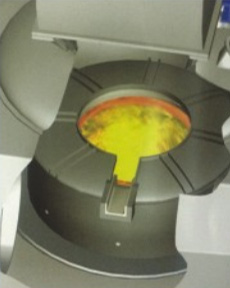
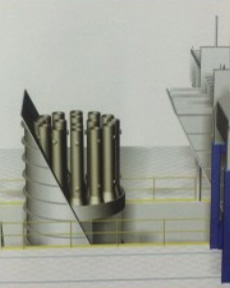
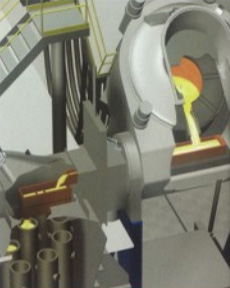
Currently, the vacuum induction melting (VIM) followed by metal mold casting process is widely used for producing high-temperature alloy master alloys, as illustrated in the diagram. In this conventional casting process, the refined molten metal is poured through a launder and finally into a metal mold, where it solidifies into the desired shape. This manufacturing method enables the production of high-temperature alloy master alloys with precise chemical composition. Through techniques such as controlled melting parameters, ceramic filtration, and optimized mold design, ingots with excellent metallurgical quality and superior performance can be achieved.
High-temperature alloy master alloys exhibit excellent high-temperature strength and creep resistance. Taking K418 superalloy master alloy as an example, after precise composition control and clean melting practices, its chemical composition must meet the requirements specified in Table 1 (in accordance with GB/T14992, GJB5512.1, and HB7763). Furthermore, after the master alloy is remelted and investment cast into test bars, the mechanical properties must satisfy the requirements listed in Table 2.
| Element | C | Mo | Cr | Al | Zr | Ti | B | ||||||||||
| Content(%) | 0.08~0.16 | 3.80~4.80 | 11.50~13.50 | 5.50~6.40 | 0.060~0.150 | 0.50~1.00 | 0.008~0.020 | ||||||||||
| Element | Nb | Fe | Mn | Si | S | P | O | ||||||||||
| Content(%) | 1.80~2.50 | ≤1.00 | ≤0.50 | ≤0.50 | ≤0.010 | ≤0.015 | ≤15ppm | ||||||||||
| Element | N | Pb | Sb | As | Sn | Bi | Ni | ||||||||||
| Content(%) | ≤35ppm | ≤0.0005 | ≤0.001 | ≤0.001 | ≤0.001 | ≤0.00005 | Bal. | ||||||||||
| Standard Number | Variety | Sampling | Tensile Properties | Durability Performance | ||||||||||||
| θ/℃ | σ b/MPa | σ po.2/MPa | δ5/ | ψ/% | θ/℃ | σ/MPa | T/h | δs/ | ||||||||
| ≥ | ≥ | |||||||||||||||
| GJB5515.1① | Master Alloy | Precision-cast test bar in as-cast condition | 20 | 755 | 686 | 3.0 | 一 | 750 | 608 | 40 | 3.0 | |||||
| 800 | 755 | 一 | 4.0 | 6.0 | 800 | 490 | 45 | 3.0 | ||||||||
| HB7763② | Master Alloy | Precision-cast test bar in as-cast condition | 20 | 755 | 686 | 3.0 | - | 750 | 608 | 40 | 3.0 | |||||
| 800 | 755 | 一 | 4.0 | 6.0 | 800 | 490 | 45 | 3.0 | ||||||||
| ①Stretching and endurance can be tested at one temperature. If the endurance performance is not qualified, it can be retested at 800 ℃, 471MPa, and a fracture time of not less than 80 hours. Every 10 furnaces should be selected for a long-term tensile test, and the δ 5 and ψ values after fracture should not be used as the basis for rejection. ②Tensile and stress rupture tests may be conducted at a single selected temperature. For every 10 heats produced, one heat shall be subjected to stress rupture testing until fracture, with actual measurements taken for percentage elongation (δ5) and percentage reduction of area (ψ). |
||||||||||||||||

In recent years, in line with China's strategic initiatives to vigorously develop the aerospace engine and ground gas turbine industries, as well as to promote the widespread application of automotive turbochargers for energy conservation, emission reduction, and environmental improvement, the demand for higher quality high-temperature alloy materials has been continuously increasing. With a limited number of domestic producers and a technological gap compared to the United States and Europe, there is a critical need for a domestic supply of high-performance, cost-effective high-temperature alloy master alloys.
In response, our company partnered with a Chinese technology firm in 2016 to construct a VIM (Vacuum Induction Melting) production line for high-temperature alloy master alloys, designed for near-net shape forming, short process flow, and low cost. The line is equipped with vacuum induction furnaces of 500kg, 300kg, and 50kg capacities. Featuring a small-volume melting chamber and a horizontal furnace structure, these furnaces achieve optimal working vacuum control. A three-phase electromagnetic stirring system ensures stable agitation of the molten pool, allowing added elements to dissolve uniformly from top to bottom while maintaining a near-constant melt temperature.
By precisely controlling the pressure and temperature of each melt, we reduce process variability, ensuring a stable distribution of elements and keeping volatile element content within a very narrow range. Additionally, the large melt surface area (bath D/H > 1) provided by the VIM furnace facilitates effective material degassing.
To monitor product quality, we have introduced the SPECTROMAXx direct-reading spectrometer from Germany, enabling online analysis of alloy composition, as well as monitoring of harmful elements and nitrogen content to ensure the quality of our master alloys.
Our company is also equipped with a mechanical properties laboratory, capable of efficiently testing materials for high-temperature stress-rupture properties, high tensile properties, and room-temperature tensile properties.
The entire production system was fully commissioned by March 2017 and has achieved industrial-scale batch production capability. We are certified under the ISO9001 quality management system and have an annual production capacity of approximately 5,000 tons of high-temperature alloy master alloys. All products have been tested by the National Analysis Center for Iron & Steel, with technical specifications meeting the corresponding metallurgical industry standard YB/T 5248-93.
Compared to traditional preparation processes, the high-temperature alloy master alloys produced by our VIM process offer advantages such as high metallurgical quality and low inclusion content.

Vacuum feeding

Measurement and Sampling

Degassing homogenization

Fill the mold

Tapping
| Grade | K417 | K418 | K419 | K438 | K444 | K452 | K4169 | |
| Chemical composition (weight%) |
C | 0.13 | 0.08 | 0.09 | 0.10 | 0.04 | 0.07 | 0.02 |
| 0.22 | 0.16 | 0.14 | 0.20 | 0.08 | 0.14 | 0.08 | ||
| Cr | 8.50 | 11.50 | 5.50 | 15.70 | 15.40 | 20.00 | 17.00 | |
| 9.50 | 13.50 | 6.50 | 16.30 | 16.30 | 21.80 | 21.00 | ||
| Mn | 0.50 | 0.50 | 0.50 | 0.20 | 0.30 | 0.30 | 0.35 | |
| Mo | 2.50 | 3.80 | 1.70 | 1.50 | 1.60 | 0.30 | 2.80 | |
| 3.50 | 4.80 | 2.30 | 2.00 | 2.30 | 0.90 | 3.30 | ||
| Mb | 一 | 1.80 | 2.50 | 0.60 | 0.10 | 0.15 | 4.40 | |
| 2.50 | 3.30 | 1.10 | 0.30 | 0.35 | 5.40 | |||
| Ta | 一 | 一 | 一 | 1.50 | 一 | 一 | 0.10 | |
| 2.00 | ||||||||
| Ni | 56.78 | 69.44 | 55.76 | 58.19 | 54.60 | 52.70 | 50.00 | |
| 64.92 | 76.75 | 63.43 | 63.94 | 60.90 | 60.90 | 55.00 | ||
| Co | 14.00 | 11.00 | 8.00 | 10.00 | 10.30 | 1.00 | ||
| 16.00 | 13.00 | 9.00 | 11.00 | 12.00 | ||||
| Ti | 4.50 | 0.50 | 1.00 | 3.00 | 4.20 | 3.10 | 0.65 | |
| 5.00 | 1.00 | 1.50 | 3.50 | 5.00 | 3.90 | 1.15 | ||
| V | 0.60 | 一 | 0.10 | 一 | 一 | 一 | 一 | |
| 0.90 | ||||||||
| W | 一 | 一 | 9.50 | 2.40 | 4.70 | 3.00 | 一 | |
| 10.50 | 2.80 | 5.90 | 4.00 | |||||
| Zr | 0.05 | 0.06 | 0.03 | 0.05 | 一 | 一 | 0.05 | |
| 0.09 | 0.15 | 0.08 | 0.15 | |||||
| Fe | 1.00 | 1.00 | 0.50 | 0.50 | 0.50 | 0.50 | 11.57 | |
| 24.83 | ||||||||
| Al | 4.80 | 5.50 | 5.20 | 3.20 | 2.80 | 2.10 | 0.30 | |
| 5.70 | 6.40 | 5.70 | 3.70 | 3.20 | 2.90 | 0.70 | ||
| Others | 一 | 一 | Cu0.40 | 一 | Hf0.20-0.40 | B0.01-0.02 | Cu0.30 | |
| B0.06-0.10 | Zr0.02-0.06 | |||||||
| Mechanical properties of alloy materials | Temperature(°C) | 750 | 800 | 950 | 800 | 900 | 一 | Room temperature |
| Tensile Strength(σb/ Mpa) |
686 | 755 | 700 | 836 | 一 | 一 | 965 | |
| Durability Performance(σ/ Mpa) |
一 | 490 | 一 | 365 | 274 | 一 | 550 | |
| Elongation(δ 1%) |
2.5 | 4 | 6 | 16.6 | 一 | 一 | 30 | |
| Grade | GH2132 | GH3039 | GH3044 | GH3128 | GH4133 | GH4169 | GH4220 | GH4708 | |
| Chemical Composition (weight%) |
C | 0.08 | 0.08 | 0.10 | 0.05 | 0.07 | 0.08 | 0.08 | 0.05 |
| 0.10 | |||||||||
| Cr | 13.50 | 19.00 | 23.50 | 19.00 | 19.00 | 17.00 | 9.00 | 17.50 | |
| 16.00 | 22.00 | 26.50 | 22.00 | 22.00 | 21.00 | 12.00 | 20.00 | ||
| Ni | 24.00 | 69.42 | 50.20 | 56.59 | 70.22 | 50.00 | 46.41 | 58.12 | |
| 27.00 | 77.60 | 63.20 | 65.20 | 76.65 | 55.00 | 60.65 | 70.05 | ||
| Co | 一 | 一 | 一 | 一 | 一 | 1.00 | 14.00 | 0.05 | |
| 15.50 | |||||||||
| W | 一 | 一 | 13.00 | 7.50 | 一 | 一 | 5.00 | 5.50 | |
| 16.00 | 9.00 | 6.50 | 7.50 | ||||||
| Mo | 1.00 | 1.80 | 1.50 | 7.50 | 一 | 2.80 | 5.00 | 4.50 | |
| 1.50 | 2.30 | 9.00 | 3.30 | 7.00 | 6.00 | ||||
| Al | 0.40 | 0.35 | 0.50 | 0.40 | 0.70 | 0.30 | 3.90 | 1.90 | |
| 0.75 | 0.80 | 1.20 | 0.70 | 4.80 | 2.30 | ||||
| Ti | 1.75 | 0.35 | 0.30 | 0.40 | 2.50 | 0.75 | 2.20 | 1.00 | |
| 2.30 | 0.75 | 0.70 | 0.80 | 3.00 | 1.15 | 2.90 | 1.40 | ||
| Fe | 50.17 | 3.00 | 4.00 | 0.20 | 1.50 | 11.92 | 3.00 | 4.00 | |
| 58.65 | 24.40 | ||||||||
| Nb | 一 | 0.90 | 一 | 一 | 1.15 | 4.75 | 一 | 一 | |
| 1.30 | 1.65 | 5.50 | |||||||
| V | 0.10 | 一 | 一 | 一 | 一 | 一 | 0.25 | 一 | |
| 0.50 | 0.80 | ||||||||
| B | 0.00 | 一 | 一 | 0.01 | 一 | 0.01 | 一 | 0.01 | |
| 0.01 | |||||||||
| Zr | 一 | 0.06 | 一 | 一 | 一 | ||||
| Ce | 一 | 一 | 一 | 一 | 0.01 | 一 | 一 | 0.03 | |
| Mn | 一 | 一 | 0.50 | 0.50 | 0.35 | 0.35 | 0.50 | 0.50 | |
| Mechanical properties of alloy materials | Temperature(°C) | Room temperature | Room temperature | 一 | 一 | Room temperature | 650 | 一 | 一 |
| Tensile Strength(σb/ Mpa) |
930 | 635 | 一 | 一 | 750 | 1000 | 一 | 一 | |
| Yield Strength(δs/ Mpa) |
590 | 一 | 一 | 一 | 1080 | 一 | 一 | 一 | |
| Elongation(δ 1%) |
15 | 3 | 一 | 一 | 16 | 15 | 一 | 一 | |
| Grade | C | Cr | Mn | Mo | Nb | Ta | Ni | Co | Ti | Hf | W | Zr | Fe | Al | Others |
| DD406 | 0.001 0.04 |
3.80 4.80 |
0.15 | 1.50 2.50 |
1.20 | 6.00 8.50 |
54.70 66.34 |
8.50 9.50 |
0.10 | 0.05 0.15 |
7.00 9.00 |
0.10 | 0.30 | 5.20 6.20 |
Re1.6~2.4 |
| DD407 | 0.007 | 7.80 8.30 |
0.01 | 2.10 2.40 |
0.15 | 3.30 3.70 |
65.7 69.4 |
5.00 6.00 |
1.80 2.20 |
0.0075 | 4.80 5.20 |
0.0075 | 0.20 | 5.80 6.10 |
- |
| DD408 | 0.03 | 15.50 16.50 |
0.15 | 一 | 一 | 0.70 1.20 |
49.62 55.50 |
8.00 9.00 |
3.60 4.20 |
一 | 5.60 6.40 |
0.007 | 0.50 | 3.60 4.20 |
Al+Ti 7.5~7.9 |
| Grade | C | Cr | Mn | Mo | Nb | Ta | Ni | Co | Ti | V | W | Zr | Fe | Al | Others |
| DZ404 | 0.10 0.16 |
9.00 10.00 |
0.50 | 3.50 4.20 |
- | - | 62.16 69.58 |
5.50 6.50 |
1.60 2.20 |
- | 5.10 5.80 |
0.02 | 1.00 | 5.60 6.40 |
- |
| DZ405 | 0.07 0.15 |
9.50 11.00 |
0.50 | 3.50 4.20 |
一 | 一 | 58.5 65.92 |
9.50 10.50 |
2.00 3.00 |
一 | 4.50 5.50 |
0.10 | 一 | 5.00 6.00 |
- |
| DZ408 | 0.07 0.10 |
8.00 8.70 |
0.10 | 0.40 0.60 |
0.10 | 2.80 3.30 |
59.03 63.27 |
9.00 10.00 |
0.60 0.90 |
0.10 | 9.30 9.70 |
0.005 0.02 |
0.20 | 5.25 5.75 |
Hf1.30~1.70 Re0.10 |
| DZ411 | 0.07 0.12 |
13.50 14.30 |
- | 1.30 1.70 |
一 | 2.50 3.10 |
58.28 62.73 |
9.00 10.00 |
4.60 5.20 |
一 | 3.50 4.10 |
一 | 一 | 2.80 3.40 |
Al+Ti≥7.80 |
| DZ417G | 0.13 0.22 |
8.50 9.50 |
0.20 | 2.50 3.50 |
- | - | 63.53 70.35 |
9.00 11.00 |
4.10 4.70 |
0.60 0.90 |
- | 一 | 0.5 | 4.80 5.70 |
- |


1. Core Knowledge Overview High-temperature alloy rods are precision-engineered metal bars designed to retain strength, resist oxidation, and maintain dimensional stability at elevated temperatures. These rods ...
READ MORE1. Overview Radiant Tubes are high-temperature, indirect heating elements commonly used in industrial furnaces and heat treatment processes. They consist of a heating source (such as a gas burner or electric he...
READ MORE1. Overview of Furnace Rolls Furnace Rolls are specialized components used in high-temperature industrial processes such as annealing, continuous galvanizing, and steel rolling. These rolls are engineered to wi...
READ MOREHeat-resistant steel precision castings refer to steel components designed to operate under high-temperature conditions. The development of these castings is closely tied to technological advancements across va...
READ MOREIn extremely harsh industrial environments, material stability directly determines the service life and safety of critical equipment. Leveraging its four major production workshops—covering casting, metalworking, welding, and sand mold manufacturing—Jiangsu Huaye Technology Co., Ltd. specializes in the field of special alloys, dedicated to providing high-performance metal material solutions to industries worldwide.
Expertise in High-Temperature and Heat-Resistant Alloys
1. Core Definition of High-Temperature Alloys
High-temperature alloys are a class of metal materials based on iron, nickel, or cobalt matrices, capable of operating continuously under high temperatures (exceeding 600°C) and specific stress loads. These materials maintain excellent oxidation resistance, corrosion resistance, and high mechanical strength even at extremely elevated temperatures. The stability of their microstructure is the primary metric for assessing their quality; this stability is typically ensured through precision casting and heat treatment processes designed to eliminate grain boundary defects.
2. Performance Advantages of High-Temperature Alloys
High-temperature alloys are widely utilized in the aviation, aerospace, and heavy industries. Their key advantages include: **Microstructural Stability:** The internal metal structure undergoes no phase transitions amidst drastic temperature fluctuations, thereby preventing deformation. **Creep Resistance:** Under constant high-temperature stress, the material demonstrates exceptional resistance to plastic deformation. **Thermal Fatigue Resistance:** The ability to withstand repeated cycles of thermal shock without developing cracks.
3. Classification Characteristics of Heat-Resistant Alloys
Heat-resistant alloys require not only high-temperature strength but also, and more importantly, the ability to resist degradation within high-temperature oxidizing atmospheres. **Oxidation Resistance:** Achieved through the formation of a dense oxide film on the surface, which acts as a barrier to prevent further erosion by external media. **Sulfidation and Carburization Resistance:** In complex chemical reaction environments, heat-resistant alloys effectively resist the penetration of harmful gases, thereby maintaining the chemical purity of the material.
4. Application Rationale for High-Melting-Point Alloys
High-melting-point alloys are typically composed of refractory metals such as tungsten, molybdenum, niobium, and tantalum. The melting points of these materials are significantly higher than those of standard steels. Through the integration of sand mold manufacturing and precision metalworking—and by carefully accounting for the processing characteristics of these high-melting-point materials—Jiangsu Huaye Technology Co., Ltd. ensures that its products retain reliable structural integrity even in extreme environments where temperatures approach the material's melting point.
Comparison Table: Industrial Applications vs. Material Characteristics
| Alloy Category | Core Elemental Base | Primary Physical Characteristics | Industrial Value Manifestation |
| High Temperature Alloy | Nickel-base / Cobalt-base | Superior instantaneous high-temperature strength | Critical thermal energy conversion components |
| High Temp Alloys | Multi-component solid solution strengthening | Long-term operational creep resistance | Industrial power and propulsion systems |
| Heat Resistant Alloy | Chromium, Silicon, Aluminum elements | Excellent high-temperature oxidation resistance | Industrial furnaces and heat treatment equipment |
| High Melting Point Alloys | Refractory metal elements | Extremely high melting threshold | Ultra-high temperature structural members |
Frequently Asked Questions (FAQ)
Q1: Why must high-temperature alloys undergo precision machining in specialized workshops?
Due to the high hardness and low thermal conductivity of high-temperature alloys, traditional machining processes can easily lead to tool wear and surface hardening of the material. Through its specialized metalworking workshops and metallographic testing center, Jiangsu Huaye Technology Co., Ltd is able to precisely control the material's physical state during processing, thereby preventing stress concentration.
Q2: What is the principle behind the oxidation resistance of heat-resistant alloys?
Heat-resistant alloys achieve oxidation resistance by incorporating specific alloying elements that react with oxygen at high temperatures to form a continuous and dense oxide film. This film bonds firmly to the base metal, effectively preventing the inward diffusion of oxygen atoms and thereby extending the material's service life.
Q3: What are the challenges involved in casting high-melting-point alloys?
The primary challenge in processing high-melting-point alloys lies in their extremely high melting temperatures, which impose rigorous demands on sand molds and casting dies. Advanced sand-molding techniques and precise cooling control systems are essential to ensure the density and dimensional accuracy of the castings, preventing the formation of shrinkage cavities or cracks.
Q4: How is the service life of high-temperature alloys evaluated?
Evaluation is primarily based on creep-rupture strength tests and high-cycle fatigue tests. At our corporate testing center, we simulate the high-temperature and stress conditions encountered in actual service environments to monitor the material's time-to-fracture and deformation levels, thereby providing a scientific basis for engineering applications.
Q5: How does Jiangsu Huaye Technology Co., Ltd ensure material purity during production?
Through the use of vacuum melting equipment in our casting workshops—supported by our accompanying testing center—we strictly control the content of impurity elements such as sulfur and phosphorus. A high-purity matrix is the fundamental prerequisite for high-temperature alloys to exhibit their superior physical properties.
About Jiangsu Huaye Technology Co., Ltd
Jiangsu Huaye Technology Co., Ltd is situated within a modern industrial park. Our expansive facility encompasses the entire industrial chain, ranging from raw material preparation to finished product inspection.
Casting Workshop: Dedicated to the melting and forming of high-temperature alloys and heat-resistant materials, ensuring the purity of the molten metal. Sand Molding: Provides high-precision mold support for castings made from high-temperature alloys with complex geometries.
Machining and Welding Workshop: Employs specialized processes to overcome the challenges of forming high-hardness materials, ensuring that the strength of welded joints matches that of the base material.
Testing Center: Conducts in-depth analysis of the chemical composition and physical properties of every material batch, ensuring full compliance with global industrial standards.