No. 308, Gongxin Road, Industrial Park, Dongxing Town, Jingjiang City, Jiangsu Province, China
 [email protected]/ [email protected]
 English
 Español
 русский
 中文简体
中文简体 No. 308, Gongxin Road, Industrial Park, Dongxing Town, Jingjiang City, Jiangsu Province, China[email protected]/ [email protected]
Petrochemical casting is the process of producing metal components — primarily from high-temperature alloys, heat-resistant steels, and corrosion-resistant superalloys — specifically engineered to withstand the extreme thermal, mechanical, and chemical conditions found in petrochemical processing plants, refineries, and chemical manufacturing facilities. These castings form the structural and functional backbone of equipment such as cracking furnace tubes, radiant coils, catalyst supports, valve bodies, pump housings, and pipeline fittings that operate continuously at temperatures ranging from 600°C to over 1,100°C under aggressive corrosive media.
Unlike general-purpose castings, petrochemical castings must satisfy stringent material standards related to creep resistance, oxidation resistance, carburization resistance, and thermal fatigue life — properties that are achieved through carefully selected alloy compositions, controlled foundry practices, and post-cast heat treatment. Understanding what petrochemical casting is, how it is produced, and what material choices are available is essential for engineers, plant operators, and procurement professionals responsible for the reliability of refinery and chemical plant infrastructure.
Content
The operating environment inside a petrochemical facility is among the harshest encountered by any engineered material. Furnace tubes in ethylene crackers, for example, cycle between ambient and process temperatures exceeding 1,050°C multiple times per year during decoking operations. Steam reformer tubes in hydrogen production plants sustain internal pressures of 20–40 bar at metal temperatures above 900°C for continuous runs of 50,000 to 100,000 hours over their design life.
Standard carbon steel or low-alloy steel castings cannot survive these conditions. The failure modes that petrochemical castings must resist include:
Each of these degradation mechanisms demands a specific alloy and casting process response — which is why petrochemical casting is a distinct discipline within the broader field of foundry engineering.
The alloy selection for a petrochemical casting is driven by the specific combination of temperature, pressure, fluid chemistry, and required service life. The dominant alloy families are:
The HK-40 alloy (25Cr-20Ni) was the workhorse of steam reformer and ethylene cracker tubes for decades. It offers good oxidation resistance up to 1,050°C and adequate creep strength for moderate-duty applications. The HP grade (26Cr-35Ni) extends this performance envelope; HP-modified alloys with niobium (Nb), titanium (Ti), or tungsten (W) additions further improve creep rupture life by 30–50% compared to standard HP through the precipitation of stable carbide phases in the austenite matrix.
These alloys are typically produced by centrifugal casting for tubular products and static casting for fittings, manifolds, and header boxes.
For the most demanding petrochemical applications — gas turbine-driven compressor components, high-temperature valve internals, and catalyst support grids operating above 1,100°C — nickel-base superalloys provide the required combination of strength and oxidation resistance. Alloys in this class typically contain 60–75 wt% nickel with additions of chromium (15–22%), cobalt, molybdenum, aluminum, and titanium. The γ′ (gamma-prime) precipitate phase gives these alloys their exceptional high-temperature strength.
Investment casting (lost-wax process) is the predominant manufacturing route for complex nickel superalloy petrochemical components because it can achieve the thin walls, internal passages, and tight tolerances that the geometry demands.
Components subject primarily to wear and moderate temperature — catalyst bed support grids, cyclone separators in fluid catalytic cracking (FCC) units, slide valves — are often cast from high-chromium irons (25–30 wt% Cr) or wear-resistant steels. These materials deliver a hardness of HRC 55–65 and good resistance to abrasive erosion while remaining cost-effective for large cross-section castings.
Cobalt-base alloys such as those in the Stellite family offer superior sulfidation and hot corrosion resistance compared to nickel-base alloys at equivalent temperatures. They are used for valve seats, nozzles, and wear-contact surfaces in refinery service where sulfur-bearing streams would rapidly degrade nickel alloys.
The geometry, alloy, production volume, and dimensional tolerance requirements of a petrochemical casting determine which foundry process is most appropriate. The four processes most widely used are:
Centrifugal casting is the dominant process for producing cylindrical tubular petrochemical components: furnace tubes, radiant tubes, reformer tubes, and transfer line fittings. Molten alloy is poured into a rotating mold; centrifugal force — typically 60–100 g — drives the metal against the mold wall, expelling slag, oxides, and gas inclusions toward the bore where they can be machined away.
The result is a tube with a dense, directionally solidified microstructure on the OD (hot face) and a cleaner, more homogeneous structure on the ID. Wall thickness uniformity of ±5% is routinely achieved. Tube lengths up to 6 meters and ODs from 50 mm to 600 mm can be produced in a single pour.
Investment casting produces near-net-shape petrochemical castings with exceptional dimensional accuracy — linear tolerances of ±0.1 to ±0.3 mm are achievable — and excellent surface finish (Ra 1.6–6.3 µm as-cast). The process is ideal for complex geometries: burner nozzles, swirl vanes, turbine-driven impellers, and instrument fittings that would require extensive machining if produced by other methods.
A wax pattern of the component is coated with ceramic slurry in multiple layers (typically 7–12 layers) to build a shell mold. The wax is melted out, the shell is fired to ceramic hardness, and the alloy is cast under vacuum or controlled atmosphere to prevent oxidation of reactive alloying elements such as aluminum and titanium.
For large, relatively simple petrochemical castings — valve bodies, pump casings, manifold blocks, and large flanges — sand casting remains the most economical process. Green sand, furan resin-bonded sand, or ceramic sand molds accommodate a wide range of alloys and part weights from a few kilograms to several tonnes. Dimensional tolerances are wider than investment casting (typically CT8–CT12 per ISO 8062), but this is acceptable for pressure-retaining bodies that will be machined on critical surfaces.
Some medium-volume petrochemical castings — standard pipe fittings, reducers, and elbows in heat-resistant alloys — are produced in permanent metal molds (graphite or machined steel) by gravity pouring. Permanent mold casting gives a faster cooling rate than sand casting, producing a finer grain size and somewhat better mechanical properties, with moderate tooling investment compared to investment casting dies.
The following table summarizes the most important petrochemical casting product categories, their typical alloys, service conditions, and casting processes:
| Product | Typical Alloy | Max. Service Temp. | Casting Process | Primary Failure Mode Resisted |
|---|---|---|---|---|
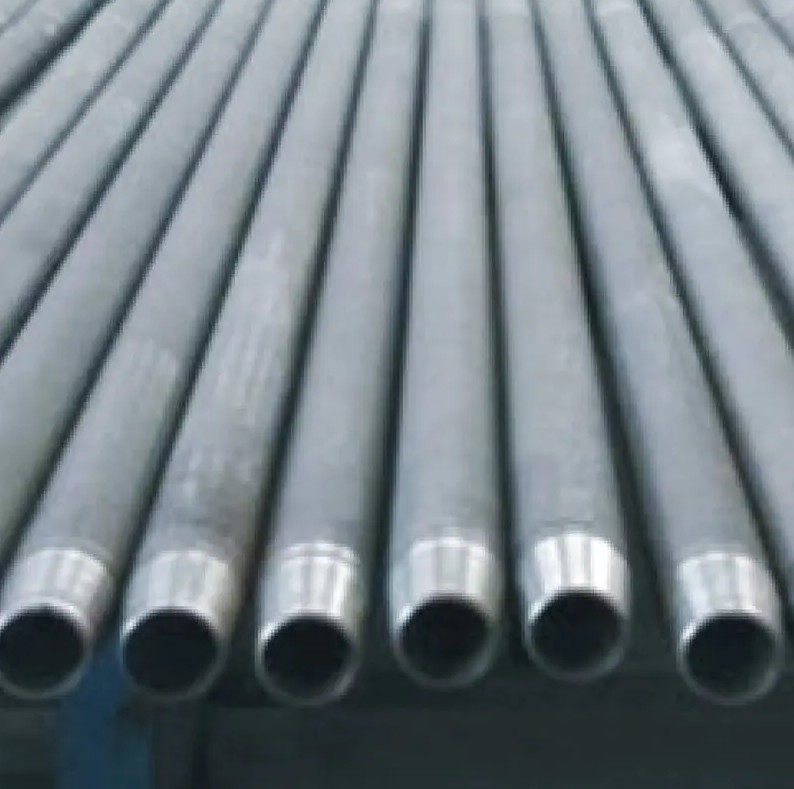
| Ethylene cracker radiant tubes | HP-Nb, HP-W | 1,100°C | Centrifugal | Creep, carburization |
| Steam reformer tubes | HK-40, HP-Micro | 950°C | Centrifugal | Creep, oxidation |
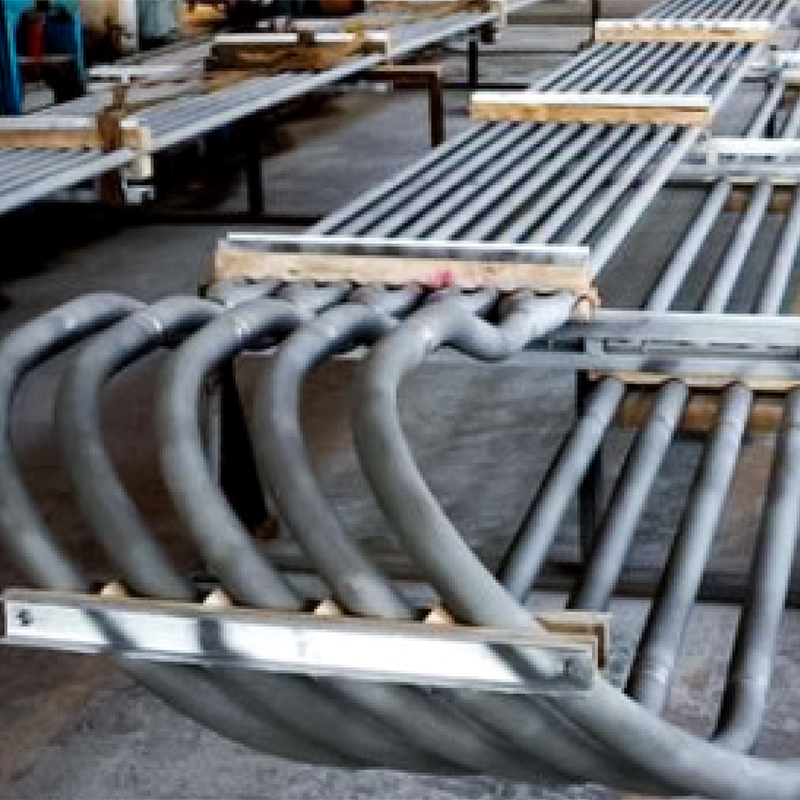
| Radiant tube assemblies (industrial furnaces) | 25Cr-35Ni, 35Cr-45Ni | 1,080°C | Centrifugal / static | Thermal fatigue, oxidation |
| FCC cyclone separators | High-Cr iron, HH alloy | 800°C | Sand casting | Erosion-corrosion |
| Burner nozzles and tips | Ni-base superalloy | 1,150°C | Investment casting | Oxidation, thermal shock |
| Valve bodies (high-temperature service) | CF8M (316SS), WC9 | 650°C | Sand casting | Corrosion, pressure creep |
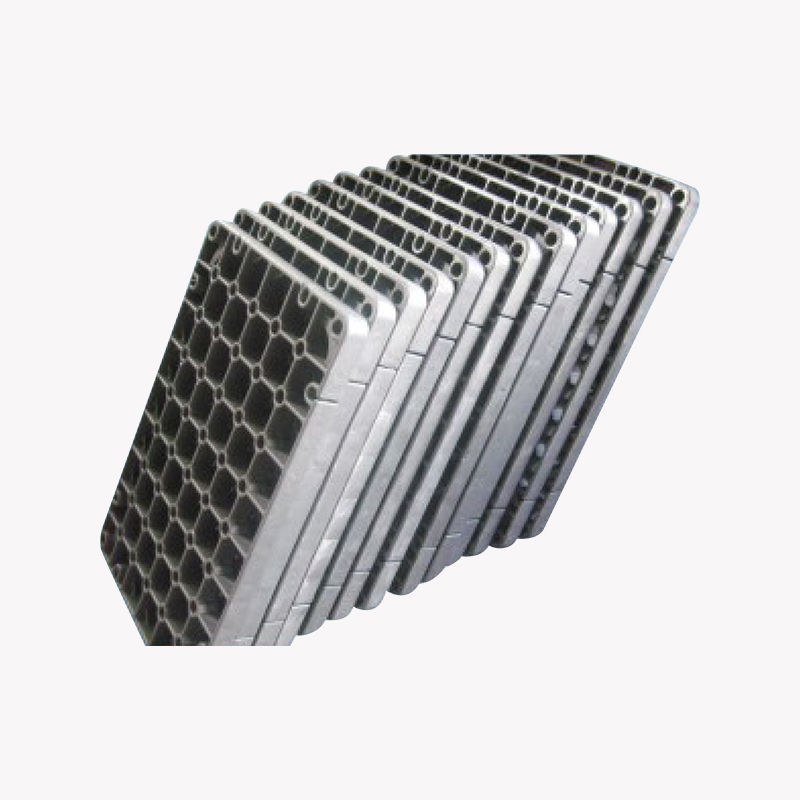
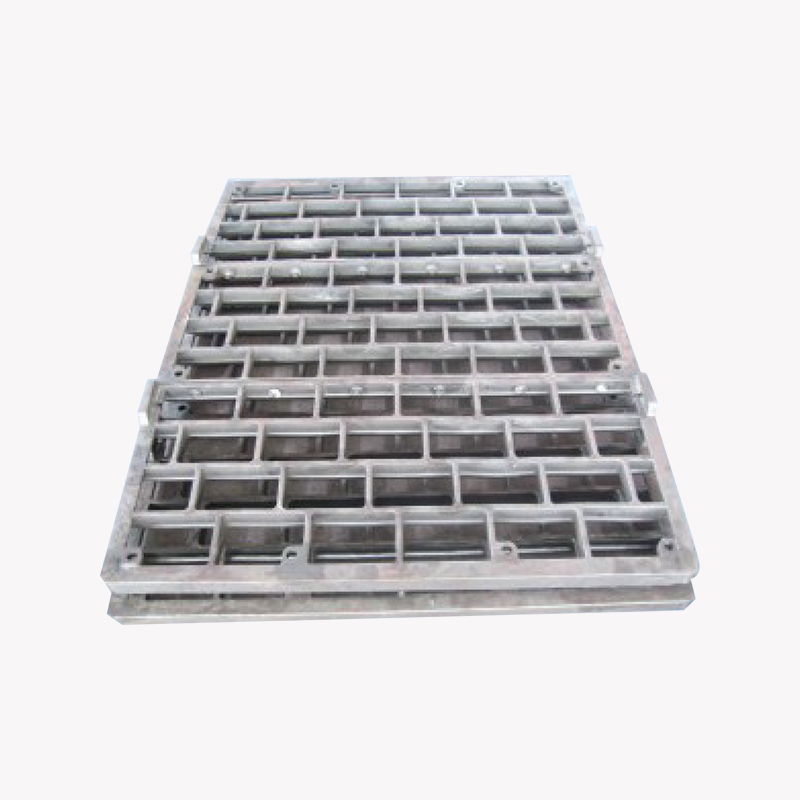
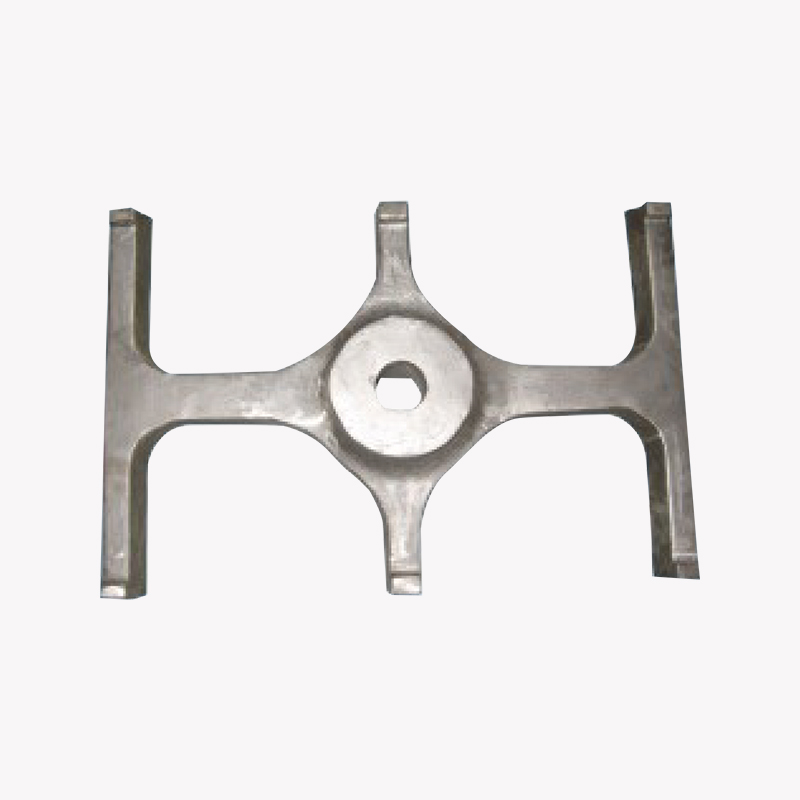
| Material baskets and trays | 25Cr-20Ni, 35Cr-45Ni | 1,050°C | Static / sand casting | Oxidation, thermal fatigue |
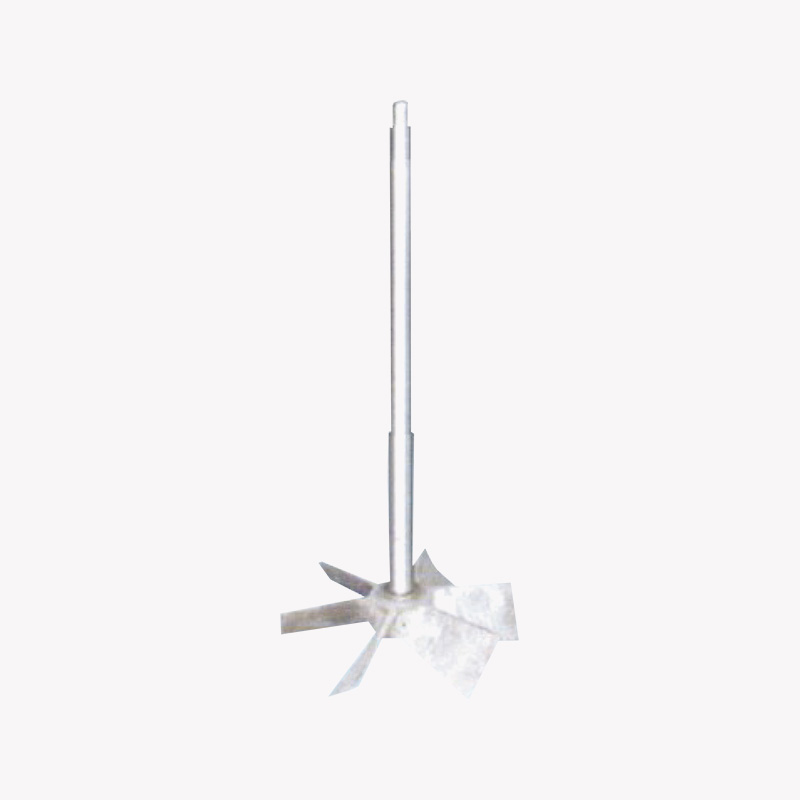
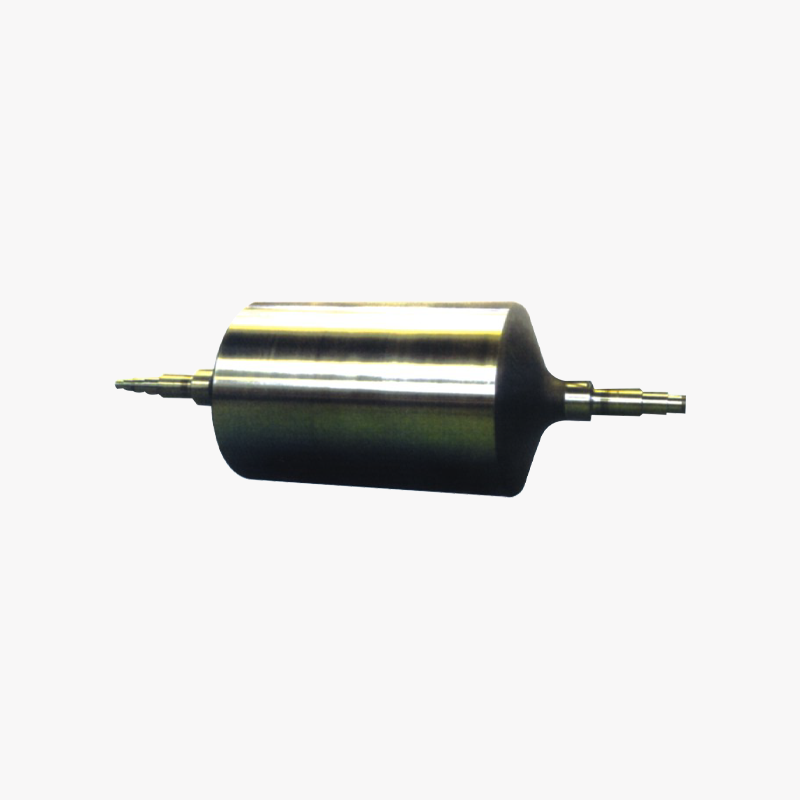
| Shaft sleeves and support arms | Heat-resistant steel | 900°C | Investment / sand | Wear, creep, oxidation |
Producing a high-quality petrochemical casting involves a rigorous sequence of engineering, metallurgical, and quality steps. A typical workflow from order receipt to shipment proceeds as follows:
Petrochemical castings used in pressure-bearing service must comply with internationally recognized standards. The most referenced include:
The long-term performance of a petrochemical casting is determined not only by its chemical composition but by the microstructure that develops during solidification and heat treatment. Key microstructural features and their engineering significance include:
In HP and HK alloys, chromium carbides (M₂₃C₆) precipitate at grain boundaries during solidification and service. A well-distributed, partially discontinuous carbide network provides grain boundary strengthening that resists creep. However, if carbides form a continuous film around grain boundaries — a condition promoted by slow cooling — they create a brittle path for intergranular fracture. Foundry cooling rate control and solution annealing temperature are critical to achieving the desired carbide morphology.
For high-temperature creep resistance, a coarse grain structure (ASTM grain size 1–3) is generally preferred because fewer grain boundaries means less grain boundary sliding per unit of creep deformation. Centrifugal casting produces a naturally coarser grain on the OD (slower cooling against the outer mold face) and finer grain on the ID — the ID grain zone is typically machined away for pressure-bearing tube applications.
Sigma (σ) phase, a brittle intermetallic compound rich in chromium, iron, and molybdenum, can form in austenitic castings exposed to temperatures between 600°C and 900°C for extended periods. Its formation reduces toughness and ductility dramatically. Careful composition control — particularly limiting silicon and reducing ferrite content — minimizes sigma phase formation risk over the service life of a petrochemical casting.
Steam cracking furnaces for ethylene production represent the single largest application of centrifugally cast heat-resistant alloy tubes. A single ethylene cracker may contain 600 to 1,200 tube assemblies, each consisting of multiple centrifugally cast tube sections welded end-to-end. The typical design life target is 100,000 hours, and tube replacement — a scheduled shutdown activity — is timed to coincide with other planned maintenance to minimize production loss. Advanced HP-Micro alloys with microalloying additions of Nb, Ti, and Zr can achieve creep rupture lives 2–3 times longer than standard HP at equivalent operating temperatures.
In steam methane reforming (SMR) furnaces, hundreds of reformer tubes filled with nickel catalyst operate at external temperatures exceeding 950°C and internal pressures of 20–40 bar. These tubes are among the most heavily loaded creep components in the process industry. Centrifugally cast HK or HP grade tubes with wall thicknesses precisely matched to the stress rupture design calculation are the standard solution. Even small composition deviations — for example, a carbon content 0.03 wt% below specification — can reduce the 100,000-hour rupture stress at 900°C by 5–8 MPa, a significant penalty in a stress-limited design.
FCC units in oil refineries convert heavy gas oil into gasoline, diesel, and LPG by contacting it with hot catalyst at temperatures around 700–800°C. The internal components — cyclone separators, standpipes, riser termination devices, and slide valves — are exposed simultaneously to high temperature, abrasive catalyst particles, and sulfur-containing streams. High-chromium iron castings and heat-resistant steel sand castings are used extensively throughout FCC internals for their combined wear and corrosion resistance.
Beyond traditional petrochemical plants, heat-resistant castings play an equally important role in coal-fired and gas-fired power stations, where superheater headers, turbine casings, and boiler fittings operate at temperatures up to 620°C at 250 bar in ultra-supercritical (USC) units. The creep-resistant ferritic steels and austenitic alloys used in these applications share the same fundamental engineering principles as petrochemical castings.
| Alloy Grade | Composition (approx.) | Max. Service Temp. | Creep Resistance | Carburization Resistance | Relative Cost |
|---|---|---|---|---|---|
| HK-40 | 25Cr-20Ni | 1,050°C | Moderate | Moderate | Low |
| HP (standard) | 26Cr-35Ni | 1,080°C | Good | Good | Moderate |
| HP-Nb (modified) | 26Cr-35Ni-1Nb | 1,100°C | Very Good | Good | Moderate–High |
| 35Cr-45Ni | 35Cr-45Ni-Si | 1,150°C | Very Good | Excellent | High |
| Ni-base superalloy | 60–75Ni-Cr-Co-Mo | 1,150°C+ | Excellent | Very Good | Very High |
| High-Cr iron | 25–30Cr, 2.5–3.5C | 800°C | Low | Moderate | Low |
The safety-critical nature of petrochemical castings in pressure-bearing service makes NDT an indispensable part of the manufacturing and in-service inspection cycle. The principal methods and their application to petrochemical castings are:
Jiangsu Huaye Technology Co., Ltd. is a high-tech enterprise and established petrochemical castings manufacturer located in the Industrial Park, Dongxing Town, Jingjiang City, Jiangsu Province, with a registered capital of 34.917 million RMB. The company specializes in the production of high-temperature alloys, high-temperature wear-resistant alloys, high-temperature heat-resistant alloys, and high-temperature corrosion-resistant alloys — precisely the material families that petrochemical, refinery, and thermal power applications demand.
As both a petrochemical castings manufacturer and a petrochemical castings factory serving global markets, Jiangsu Huaye Technology offers a comprehensive product portfolio that addresses the full spectrum of high-temperature component requirements:
These products are supplied to customers in aerospace, marine, petrochemicals, thermal power, metallurgy, and strip steel processing — industries that impose some of the most rigorous material and dimensional quality requirements in manufacturing. Jiangsu Huaye Technology's integrated capabilities — spanning alloy design, foundry production, machining, heat treatment, NDT, and factory assembly — allow the company to deliver complete solutions rather than raw castings, shortening supply chains and reducing total project risk for petrochemical plant operators and engineering contractors worldwide.
Engineers and procurement professionals evaluating petrochemical casting suppliers should assess the following capabilities and credentials:
Castings are produced by pouring molten metal into a mold; forgings are produced by mechanically working solid metal under pressure. Castings offer greater design freedom for complex shapes and can accommodate alloys that are difficult to forge (such as highly alloyed heat-resistant grades). Forgings typically have superior tensile strength and toughness due to the wrought, work-hardened microstructure. In petrochemical applications, centrifugally cast tubes are preferred for furnace service due to their wall-thickness uniformity and coarse grain creep resistance; forgings are used for flanges, valve bodies, and fittings where impact toughness and weldability are priorities.
Design life targets vary by application. Ethylene cracker and steam reformer tubes are typically designed for 100,000 hours (approximately 11 years) of continuous operation. In practice, actual tube life can range from 60,000 to over 150,000 hours depending on operating temperature accuracy, decoking frequency, feedstock sulfur content, and tube alloy quality. Static castings such as valve bodies and flanges often outlast the plant's intended 30-year design life if correctly specified and maintained.
Weld repair of heat-resistant austenitic castings is possible but requires careful procedure development because the alloys are susceptible to hot cracking and strain-age cracking in the heat-affected zone. Repairs must use matching or overmatching filler metals and, for HP and higher alloys, preheat and post-weld heat treatment to restore the microstructure. For furnace tubes in creep service, weld repairs are generally not accepted for pressure-bearing zones; replacement is the standard approach.
Silicon (Si) additions of 1.5–2.5 wt% are included in many petrochemical casting alloys — particularly those intended for carburizing service — because Si forms a dense SiO₂ sub-layer beneath the Cr₂O₃ surface oxide, acting as a secondary barrier to carbon ingress. However, silicon also reduces creep ductility and promotes sigma phase formation, so its content must be carefully balanced against these negative effects.
We will reply to you as soon as possible.
 custom alloys for sale
wholesale different alloys
custom alloys for sale
wholesale different alloys